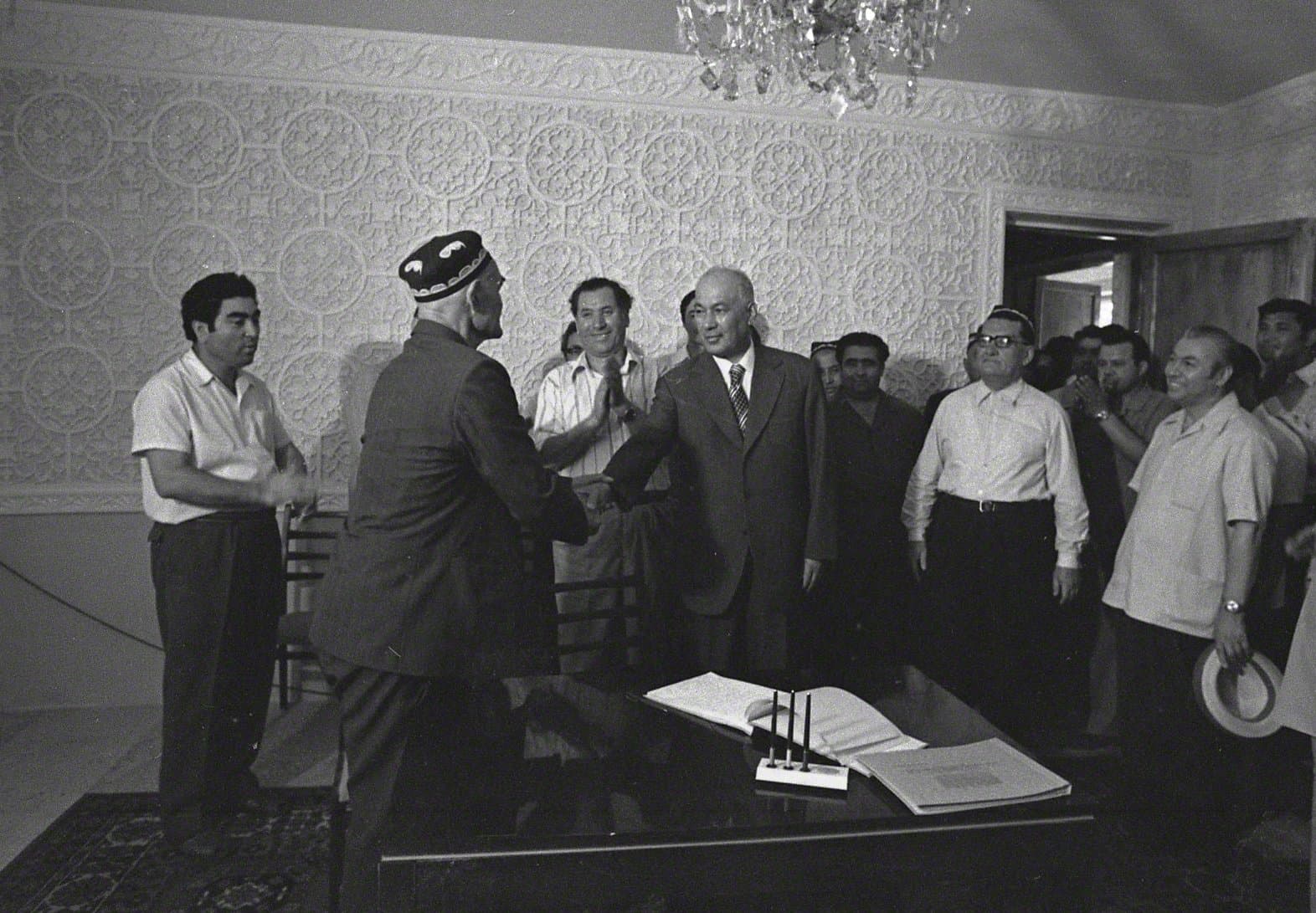
SEVENTY - SECOND HALF (1976 - 1979). EXPORTS, COTTON AND BEGINNINGS OF CORRUPTION
In the mid-1970s, Uzbekistan continued to conduct very active political and economic cooperation with the countries of Africa and the Arab East. Uzbekistan supplied a variety of goods, 90% of which were machinery and equipment. For example, cotton harvesters and tractors were exported in large quantities to Iraq and Syria, tractor trailers to Ethiopia and Syria, excavators and transformer substations to Iraq, diesel engines to Syria and Sudan, pumps to Iraq and Syria, wires and cables to Libya, Iraq and Syria.
BUT THE MAIN TASK FOR UZBEKISTAN WAS STILL THE EXPORT OF COTTON. MOREOVER, THE PLAN BECAME MORE AND MORE UNACCEPTABLE YEAR AFTER YEAR.
Uzbekistan overcame the four-million-tonne mark in raw cotton in 1966, it picked more than five million tonnes in 1974, and four years later, the republic reported the production of 5.5 million tonnes of cotton. But since the early 1970s, Sharaf Rashidov repeatedly discussed with Moscow the possibility of reducing the cotton plan because he understood it was almost impossible to collect the required amount of raw cotton, which meant there would be falsifications. To fulfil the plan, people will have to give figures different from real ones. But Moscow was not going to reduce the plan – the USSR could not lose the world championship in cotton picking.
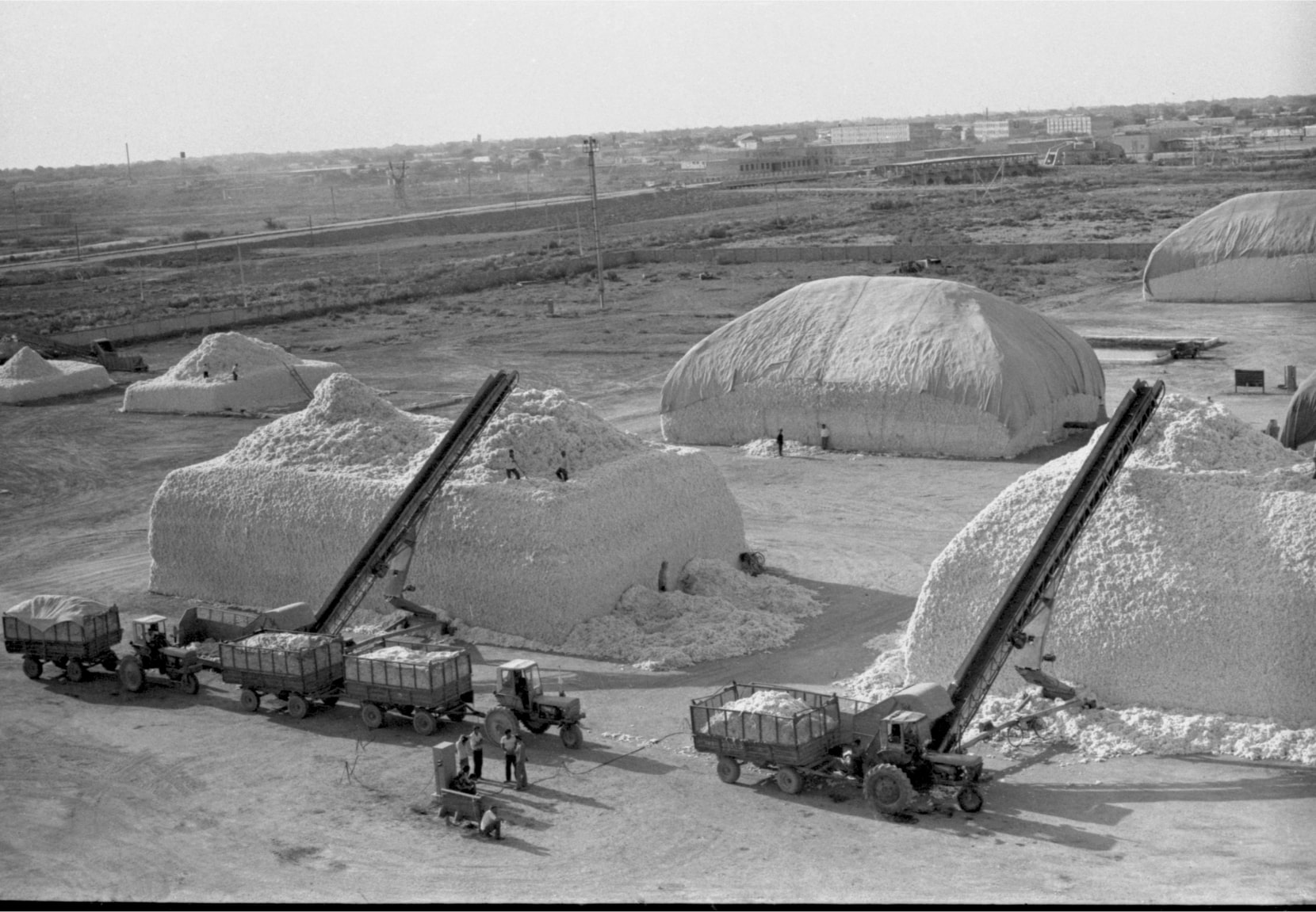
Cotton fields occupied almost 70% of all cultivated land, breaking the rational structure of agriculture. And as before, the purchase prices for cotton were so low they barely covered production costs. The problem was aggravated by an extremely high degree of monopolisation of cotton production, which led to the exhaustion and erosion of lands, decreasing of soil fertility, and deterioration of their aquatic and physical properties. In his report at the 1977 session of the VASHNIL (All-Union Academy of Agricultural Sciences named after V. I. Lenin), Sharaf Rashidov predicted the actual exhaustion of the Aral Sea basin water resources by 1985.
NOTWITHSTANDING, THE COTTON EXPANSION CONTINUED AND CAUSED THE FALSIFICATION OF FIGURES. "AND WHAT DO YOU WANT FROM ME? WHAT CAN I DO ABOUT ALL THIS?" SHARAF RASHIDOV SAID WEARILY WHEN HE WAS INFORMED ABOUT THE INFAMOUS FACTS RELATED TO COTTON.
At the same time, according to Sharaf Rashidov's biographers, in the early 1970s, in almost all of his speeches to Republican party members and economists, he noted that anyone who faked figures on the delivery of cotton would be severely punished. And he kept his promises: dozens of fraudsters in the republic were sent to the dock every year. But the situation did not change for the better – the plan increased, and with it, the temptation to fulfil the task dishonestly.